Routing & Enforcement
pfSense provides WAN routing, NAT, DNS, DHCP, inter-VLAN routing, and policy enforcement through the LAN trunk.
Network Security • Home Lab Part 2
Designed and configured a segmented home network that separates trusted users, lab systems, cameras, storage, management interfaces, and guests while allowing only the communication each zone requires.
Architecture
pfSense provides WAN routing, NAT, DNS, DHCP, inter-VLAN routing, and policy enforcement through the LAN trunk.
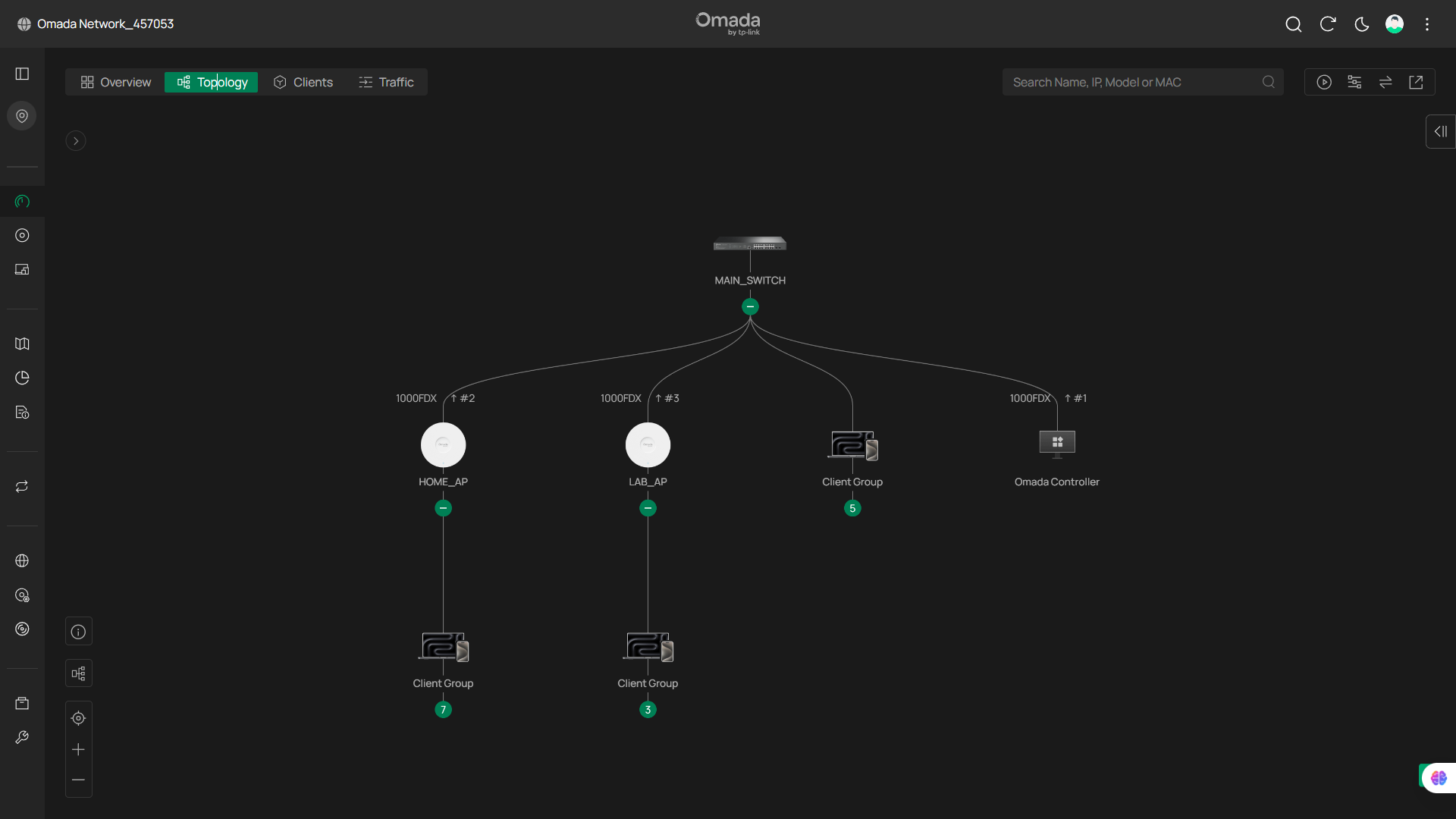
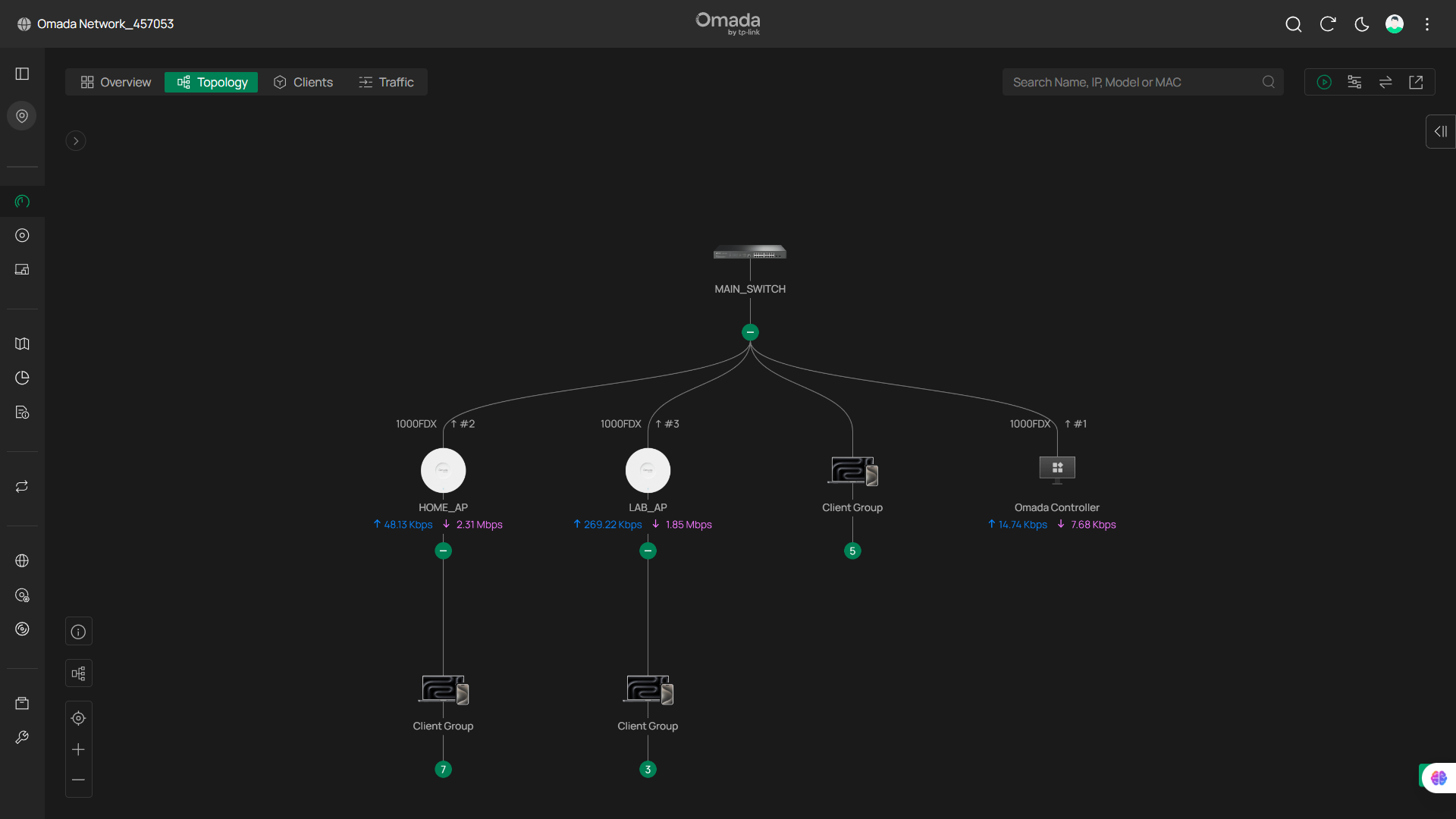
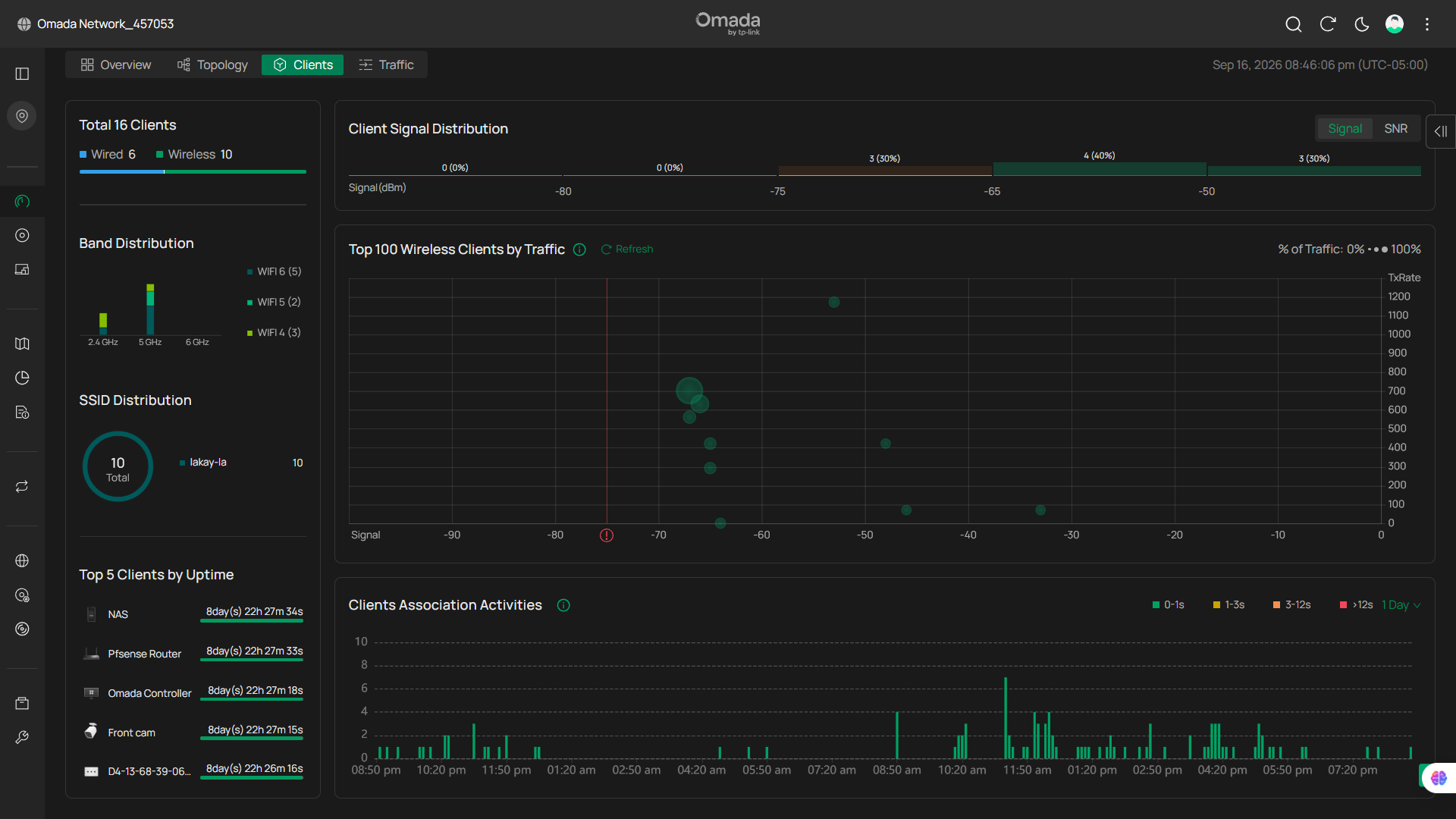
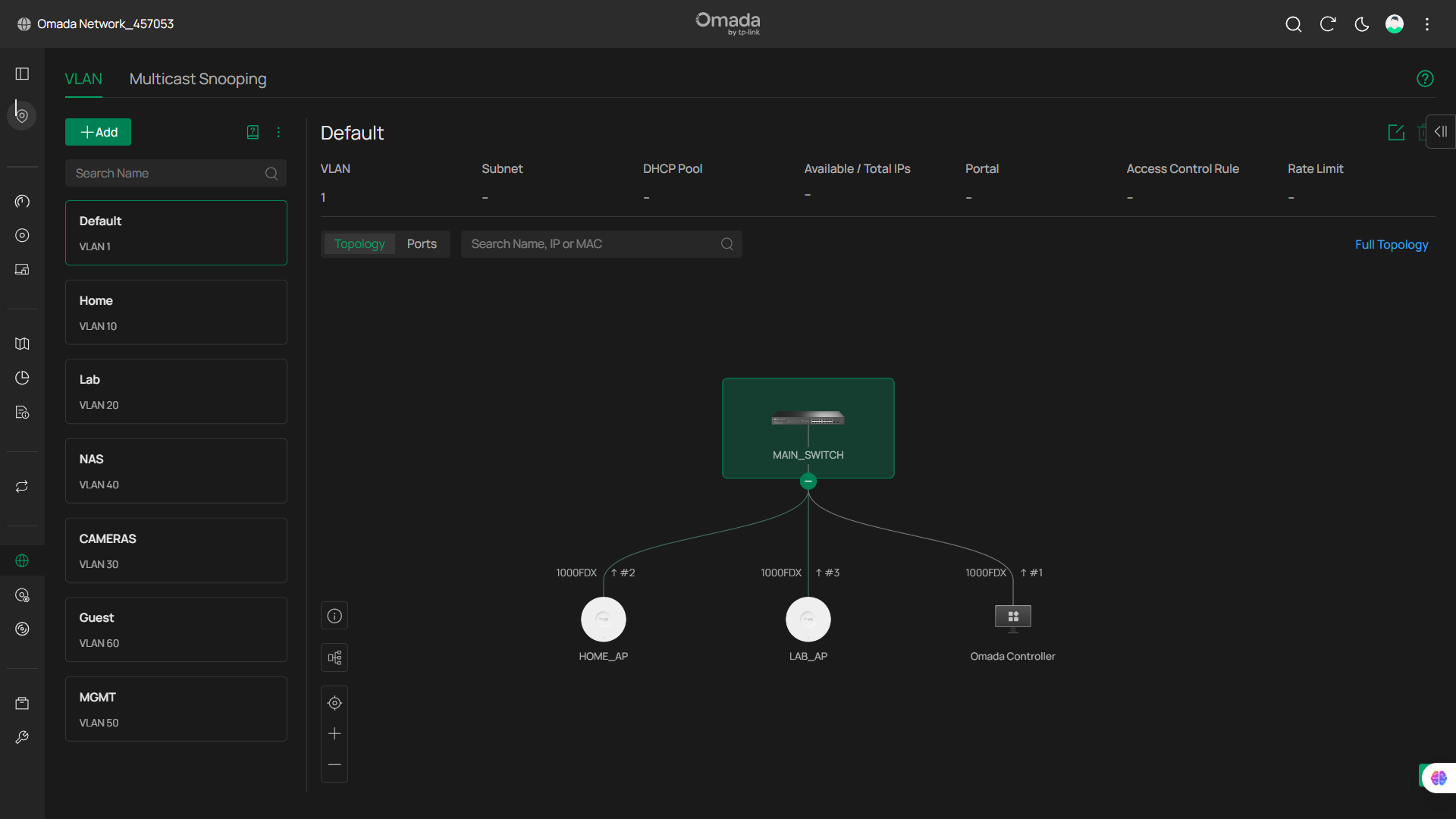
The managed Omada switch carries tagged VLAN traffic. Separate HOME and LAB SSIDs are delivered through their assigned EAP650 access points.
The NAS and cameras use dedicated networks. Explicit rules permit required recording and trusted-user access while reducing lateral movement.
Addressing plan
| VLAN | Zone | Subnet | Primary purpose |
|---|---|---|---|
| 10 | HOME | 192.168.10.0/24 | Trusted household devices and wireless printer |
| 20 | LAB | 192.168.20.0/24 | Virtual machines, servers, and technical testing |
| 30 | CAMERAS | 192.168.30.0/24 | Two Reolink Duo 3 PoE cameras |
| 40 | NAS | 192.168.40.0/24 | Centralized storage, backups, and camera recordings |
| 50 | MGMT | 192.168.50.0/24 | pfSense, switch, controller, and AP administration |
| 60 | GUEST | 192.168.60.0/24 | Internet access for visitors without internal access |
Switching design
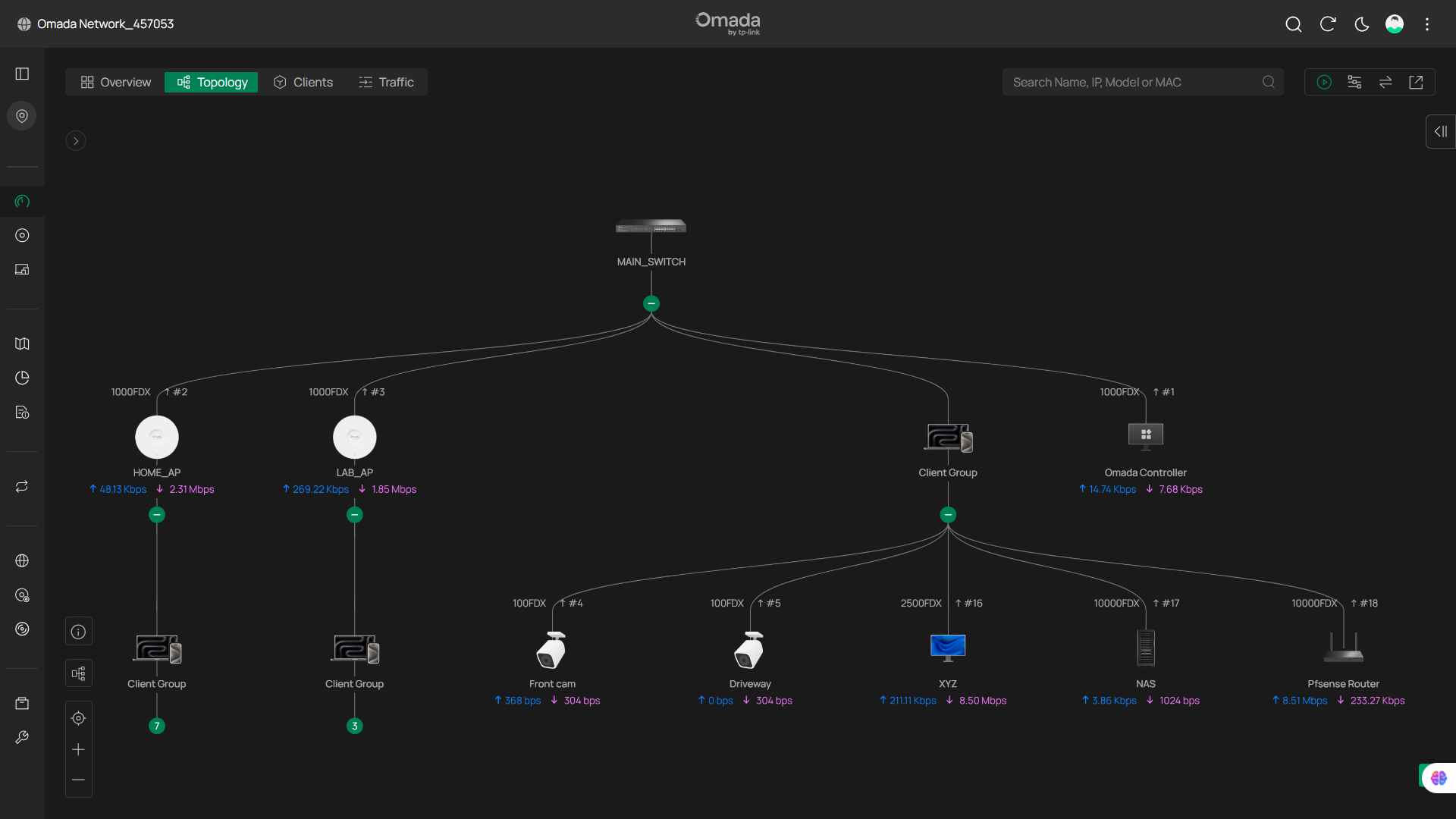
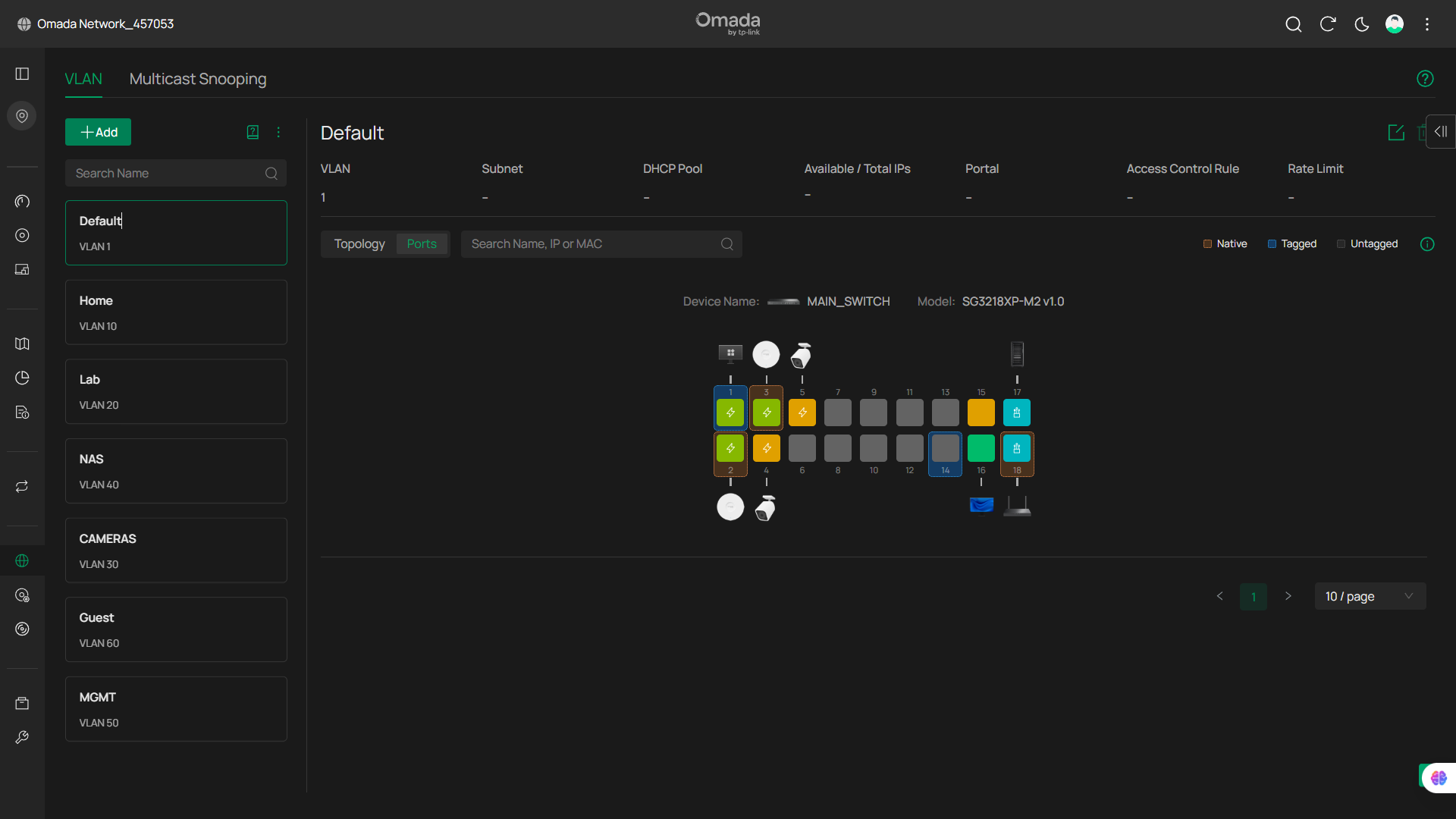
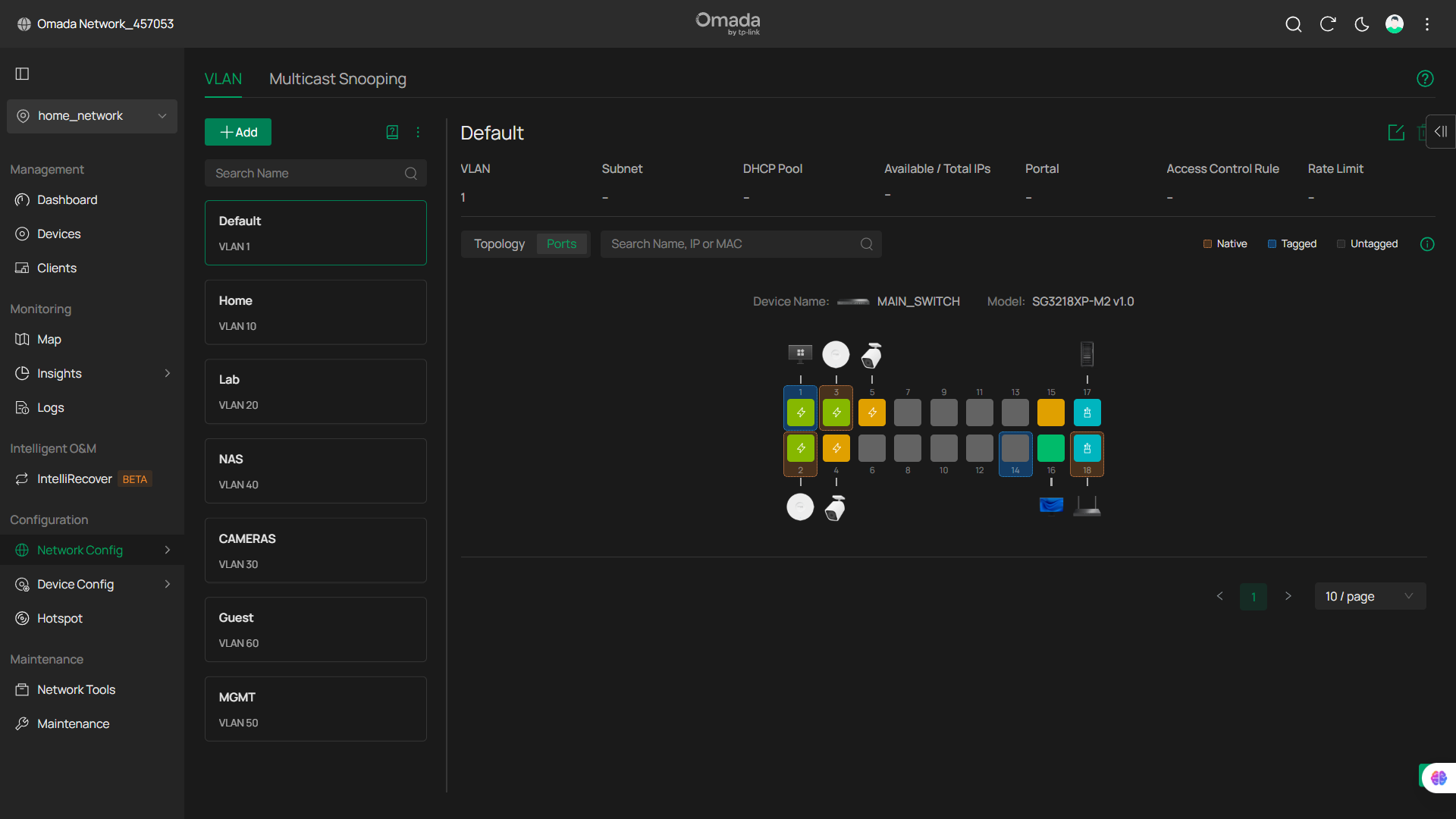
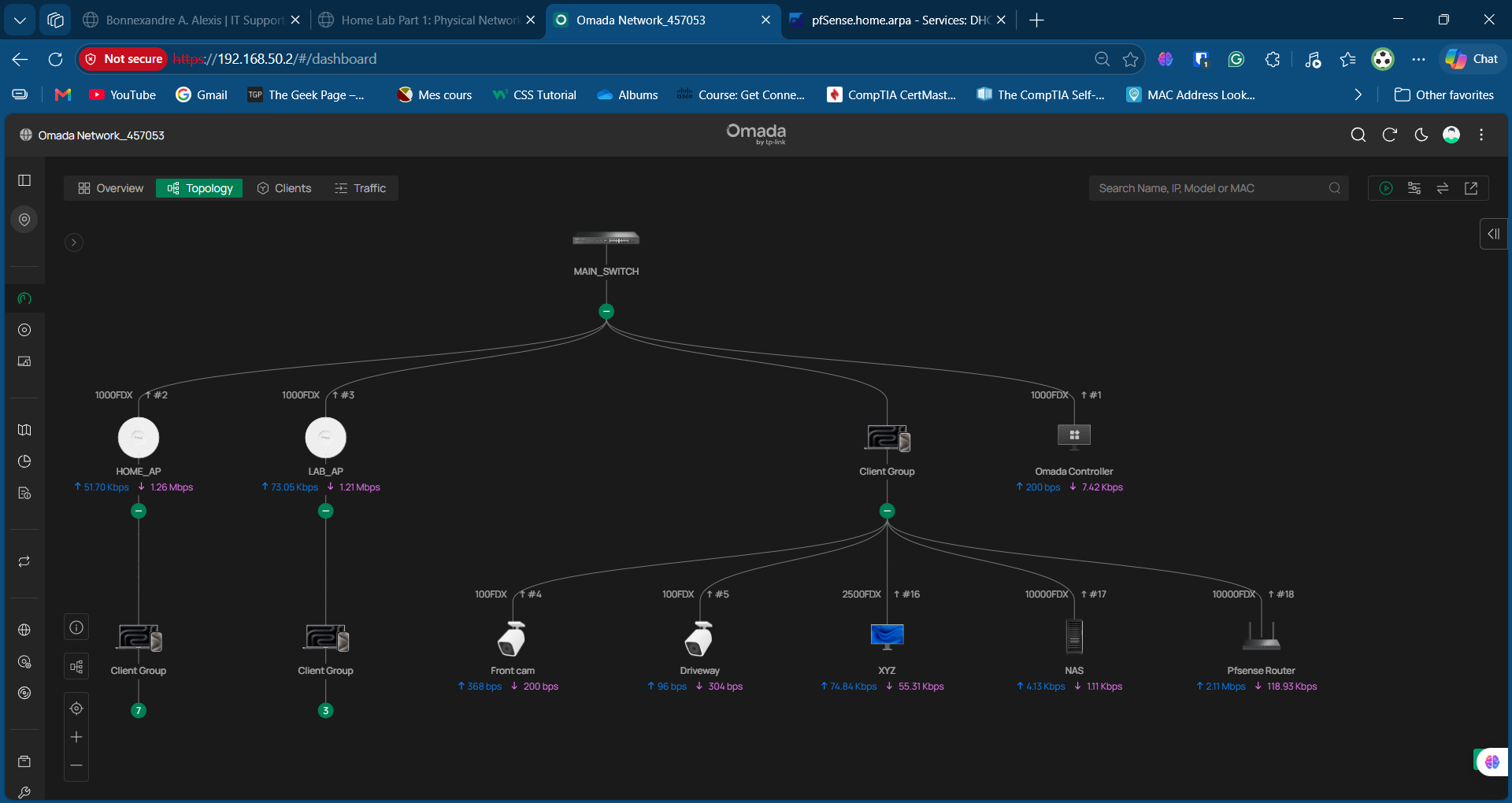
Switch port 18 carries VLANs 10, 20, 30, 40, 50, and 60 between the switch and pfSense.
Ports 2 and 3 connect the EAP650 access points. Management uses VLAN 50 while wireless traffic is assigned to the appropriate VLAN.
Dedicated access-port profiles place the NAS, cameras, and management devices directly into their assigned security zones.
Access policy
Troubleshooting
Traced missing leases and intermittent connectivity to tagging, trunk membership, PVID, and native-VLAN mismatches across pfSense and Omada.
Investigated legacy VLAN 1 dependencies, moved infrastructure administration toward VLAN 50, and restored controller-to-AP connectivity after addressing changes.
Tested inter-VLAN rules for HOME, NAS, CAMERAS, and MGMT; used logs, connectivity tests, and packet capture to distinguish firewall issues from endpoint application issues.
Evaluated Suricata behavior after legitimate management traffic was affected and adjusted the implementation approach to preserve availability while improving visibility.
Implementation evidence
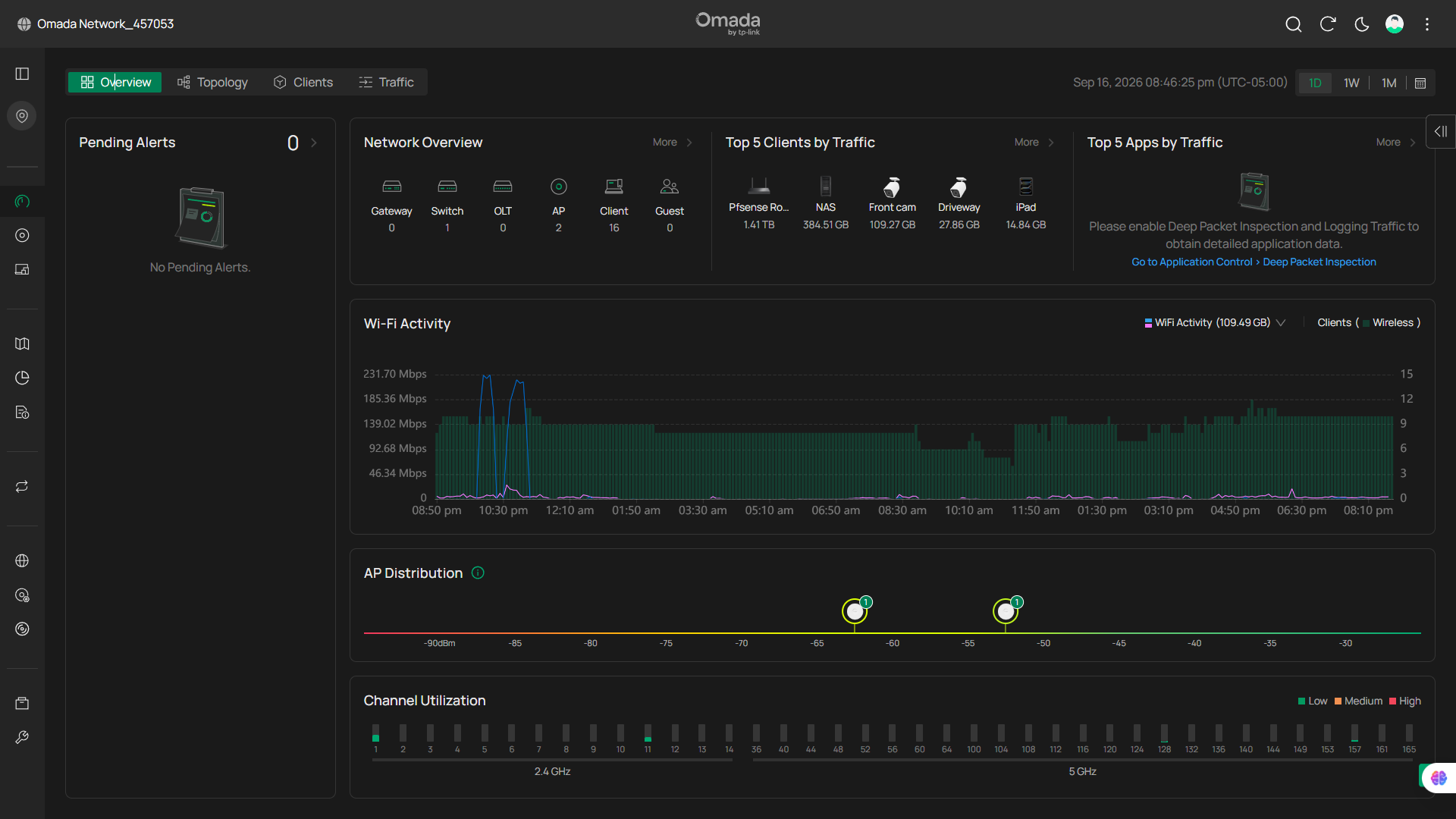
Select any screenshot to open the full-resolution version. The gallery documents the deployed topology, connected clients, wireless operation, VLAN views, and switch-port assignments.
Outcome
Home, lab, camera, NAS, management, and guest functions operate as separate zones with deliberate access paths.
The environment has a documented addressing scheme, switch-port design, service requirements, and troubleshooting history for repeatable changes.
Network design, VLAN trunking, firewall administration, DHCP, Wi-Fi segmentation, packet analysis, IDS/IPS evaluation, testing, and technical documentation.
Related project: Home Lab Part 1 — Physical Network Infrastructure →